Ford F-150 Dent Repair — Aluminum Body PDR Done Right
Since 2015, the F-150 body is aluminum — and most PDR shops still aren’t equipped for it. Joe has the aluminum-specific tooling and the experience to handle tailgate dents, bedside damage, and door work without leaving a trace.
The F-150 Aluminum Body Changed Everything for PDR
In 2015, Ford made a decision that the rest of the truck industry is still catching up to: the F-150 body became aluminum. Doors, hood, fenders, tailgate, bed sides — all aluminum panels over a high-strength steel frame. It saved the F-150 around 700 pounds. It also made the truck nearly impossible to repair correctly with steel-era PDR techniques. Steel rods and tips designed for cold-rolled steel leave micro-marks and surface distortions on aluminum that show up in angled light — sometimes worse than the original dent.
Joe Garcia has been doing PDR since 1997 — long enough to have invested in aluminum-specific tooling when Tesla and Ford forced the industry to adapt. Most Inland Empire PDR shops still don’t have the right tools for an F-150 tailgate or bedside dent. They’ll either decline the work or attempt it with steel tools and leave a problem worse than the dent. Send Joe a photo and he’ll tell you straight whether it’s a clean PDR repair or whether the panel needs body shop attention.
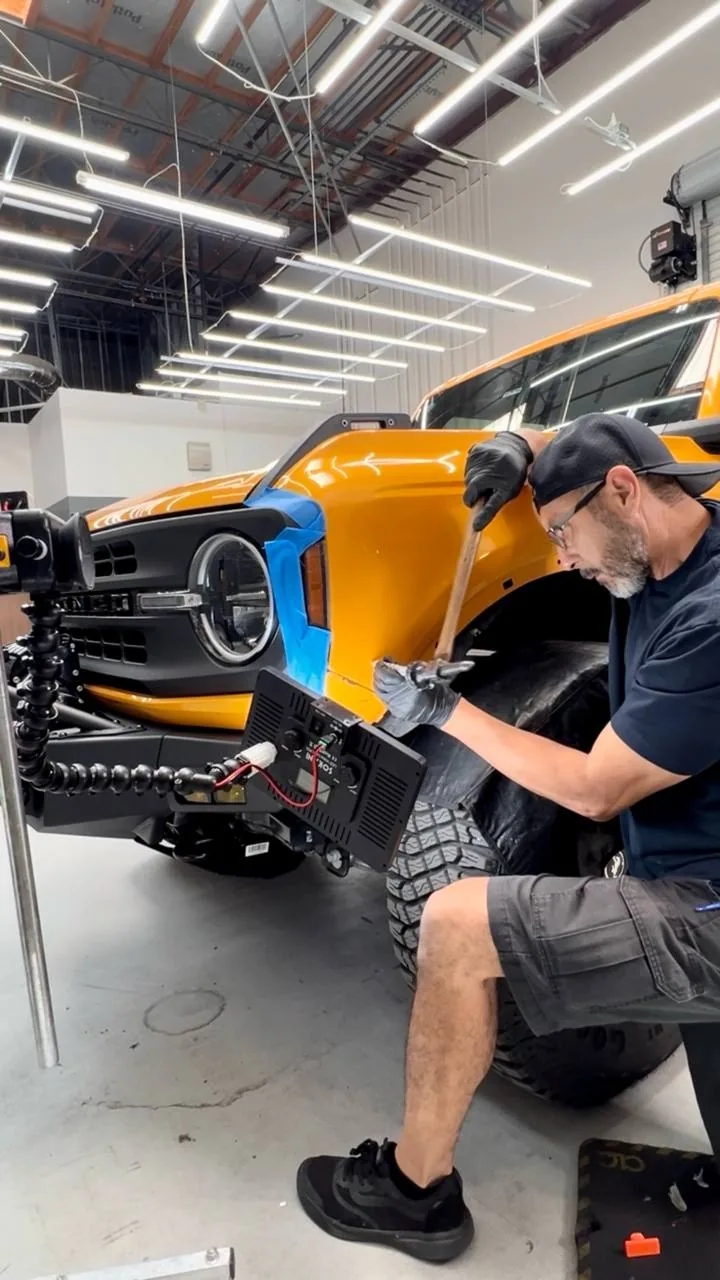
Why PDR for Ford F-150
F-150 owners use their trucks. That’s the point. The repair approach should match — fast, clean, and back to factory without disturbing the aluminum panels Ford engineered.
Aluminum Body — Most Shops Aren’t Equipped
The 2015+ F-150 uses aluminum body panels — same as Tesla and Rivian. Most PDR shops haven’t invested in aluminum-specific tooling. Joe has the dedicated tips and rods designed for aluminum work. The metal behaves differently and requires patience the wrong shops won’t take.
Trucks Hold Value When the Paint Stays Original
F-150 resale is strong — especially Lariat, King Ranch, and Platinum trims. A body shop respray and Carfax entry knock thousands off private-party resale. PDR generates zero record. Original Ford paint stays original. The truck sells as a clean-history vehicle.
Work Trucks Take Hits — PDR Handles It Clean
Tailgate dents from cargo, bedside encounters with garage doors, door dings from job sites. PDR is the right way to fix a working truck. No paint shop downtime, no week without your F-150 on the job. Most repairs back the same day.
Common F-150 Damage — and How PDR Handles It
After 28 years and a steady stream of F-150s through the Upland shop, Joe knows the damage pattern.
Tailgate Dents — The F-150’s #1 Repair
The signature F-150 PDR job. A dent across the tailgate from cargo, a falling tool, or a low garage door. The F-150 tailgate is large, flat, and aluminum — it shows damage immediately. Joe handles tailgate repair as a specialty. Most tailgate dents pop out in 90 minutes to 2 hours.
Bedside Damage — Trail Contact & Parking Lots
Bedside aluminum dents from job-site contact, off-road brush, or parking lot encounters. The bedside has limited inner access — repair requires patience and the right tools. Joe takes bedside work he’s confident he can complete to standard.
Door Dings — Driver and Passenger
Most common pickup-related damage. F-150 doors are aluminum — same panel material as Tesla. A standard PDR shop with steel-era tooling will either decline or leave marks. Joe handles aluminum door dings cleanly with the right tip set.
Hood Dings — Hail & Falling Branches
The F-150 hood is aluminum and broad. Hail or branch damage shows immediately in sunlight. PDR on aluminum hoods is more time-intensive than steel — but it’s the only repair that keeps Ford’s factory finish intact.
Fender Creases — Curb & Trail Encounters
Front fenders catch curb scrapes when parking and trail brush when off-road. Aluminum fenders work-harden under pressure — wrong technique leaves the panel worse than before. Joe’s aluminum approach restores the panel without micro-marks.
Cab Roof & Sunroof Surround
F-150s parked outdoors during occasional hail events end up with multiple shallow dents across the roof. Multi-dent hail repair on aluminum is a Dent Evo specialty — Joe quotes the full job after photo review.
Why F-150 PDR Requires a Specialist
Aluminum is not steel. It work-hardens under pressure, behaves differently under tension, and shows tool marks that steel would absorb. The F-150’s aluminum body changed PDR — and most shops haven’t kept up.
The F-150 needs aluminum-specific tooling — not steel rods with extra patience
When Ford switched the F-150 to aluminum in 2015, the PDR industry split into two camps: shops that invested in aluminum-specific tools and shops that kept using steel-era rods and tips. Steel tools on aluminum leave micro-marks that show in angled light. The dent might pop out, but the panel isn’t right — and the customer often doesn’t see it until they wash the truck in direct sun.
Aluminum-specific PDR tips are softer, lower-friction, and engineered for the way aluminum behaves under pressure. The technique is also different — less force, more time, more reading of the panel. Joe has the tooling and the patience that aluminum panel work requires.
The F-150 Lightning shares the same aluminum body as the gas F-150, so PDR techniques carry over to the EV truck. Joe handles Lightning PDR exactly the same way — aluminum-specific tools, careful technique, no contact with high-voltage components (which PDR doesn’t touch anyway).
Joe uses tips and rods engineered for aluminum panel work. Standard steel PDR tools leave marks on aluminum that are often permanent.
The F-150 tailgate is the #1 PDR repair on this truck. Joe sees it weekly and has the technique dialed in for the panel’s geometry.
The 12th-gen F-150 (2015+) and 14th-gen (2021+) both use aluminum body panels. Joe handles both generations with the same care.
Every F-150 repair comes with a complete satisfaction guarantee or no charge applied. Joe only takes work he’s confident he can complete to standard.
Simple Process, Serious Results
F-150 dent repair at Dent Evo is four steps — start to finish.
F-150 Aluminum Repair — Quoted After Photo Review
Aluminum repairs aren’t priced like steel dents. Each F-150 job is quoted based on panel, dent size, and access complexity.
Most F-150 door dings and small bedside dents fall in the $200–$550 range. Tailgate work, multi-dent damage, and complex panel jobs are quoted individually after photo review. Aluminum takes longer and requires specialty tools, so repairs are priced accordingly. Joe gives you a close price range — no markups, no surprises.
Get Your F-150 Estimate View full pricing breakdown →F-150 Owners From These Foothill Cities
Most Inland Empire F-150 owners drive in from one of these communities. Shop at 1220 Dewey Way Suite A, Upland.
Ford F-150 PDR FAQ
Common questions from F-150 owners in Upland and the Inland Empire.
Is PDR safe on the F-150 aluminum body?
Can you repair a tailgate dent on my F-150?
Will the repair show up on Carfax?
How is F-150 PDR priced?
Do you work on the F-150 Lightning EV?
Your F-150 deserves an aluminum
specialist. Send us a photo.
No paint. No filler. No Carfax record. Aluminum-specific tooling — done correctly the first time.
Get a Free F-150 Estimate Or call (909) 340-3440 — Joe picks up.